
The Biblical office
It is our theological position that Biblically, all three terms refer to the same group of men. Here’s an explanation of each word and then a conclusion of why we believe they refer to the same office of church leadership.
Elder (presbyteros)
The Greek word presbyteros (elder) occurs 66 times in NT. On a few occasions it is used merely to designate older men. At other times the word refers to members of the Jewish Sanhedrin. It most frequently is used to describe men recognized as the authoritative leaders in the Christian church: Acts 11:30; 14:23 ; 15:2, 4, 6, 22 ; 16:4; 20:17; 21:18; 1 Tim 5:17, 19; Titus 1:5; James 5:14; 1 Peter 5:1, 5.
Overseer (episkopos)
The Greek word episkopos (usually translated “overseer”) is used to refer to the men keeping watch over the church, and occurs five times: Acts 20:28; Philippians 1:1; I Timothy 3:2; Titus 1:7; I Peter 2:25.
Shepherd/Pastor (poimenas)
Shepherds = poimenas = "pastor" in Latin; someone who the Lord raises up to care for the total well-being of His flock: Ephesians 4:11.
Why they’re the same office
In Scripture, we can see evidence that all 3 unique words are used to refer to the same group of individuals.
Acts 20:17-18, 28 “Now from Miletus he sent to Ephesus and called the elders of the church to come to him. 18 And when they came to him, he said to them: … ‘Pay careful attention to yourselves and to all the flock, in which the Holy Spirit has made you overseers, to care for the church of God, which He obtained with His own blood.’“ (The Greek word frequently translated as "to care for" is poimainein.)
1 Peter 5:1-2 “So I exhort the elders among you, as a fellow elder and a witness of the sufferings of Christ, as well as a partaker in the glory that is going to be revealed: shepherd the flock of God that is among you, exercising oversight”
Standards
They must meet the qualifications as found in 1 Timothy 3:1-7/Titus 1:5-9. When the current elders consider candidates and examine their lives and find men who meet these qualifications and desire to serve in this way (1 Timothy 3:1; 1 Peter 5:2b), we present them to the congregation for appointing to the office. For those who are then chosen to serve we expect 4 primary things from them:
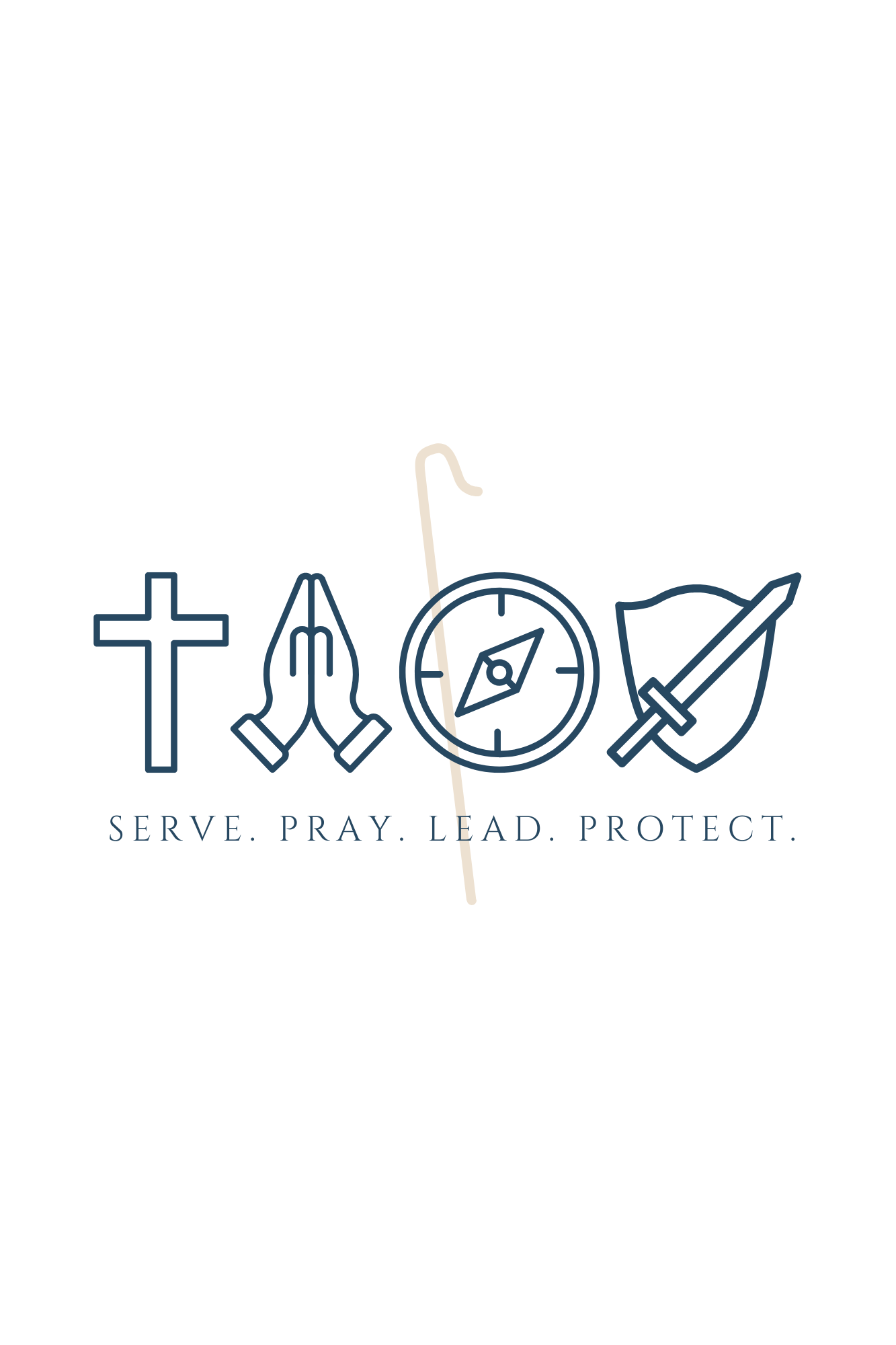
1) The cross reminds us elders must sacrifice and serve the Church like Christ did during His ministry, in all humility and love (John 13:12-15; Philippians 2:3-5).
2) The folded hands remind us elders must devote themselves to prayer (1 Samuel 12:23; Acts 6:1-4).
3) The compass reminds us elders set direction and lead (Acts 20:28; 1 Peter 5:2a).
4) The shield and sword remind us elders equip and defend the church (Acts 20:29-31; 2 Timothy 2:1-2, 4:2; Titus 1:7, 9).
Meet our current elders
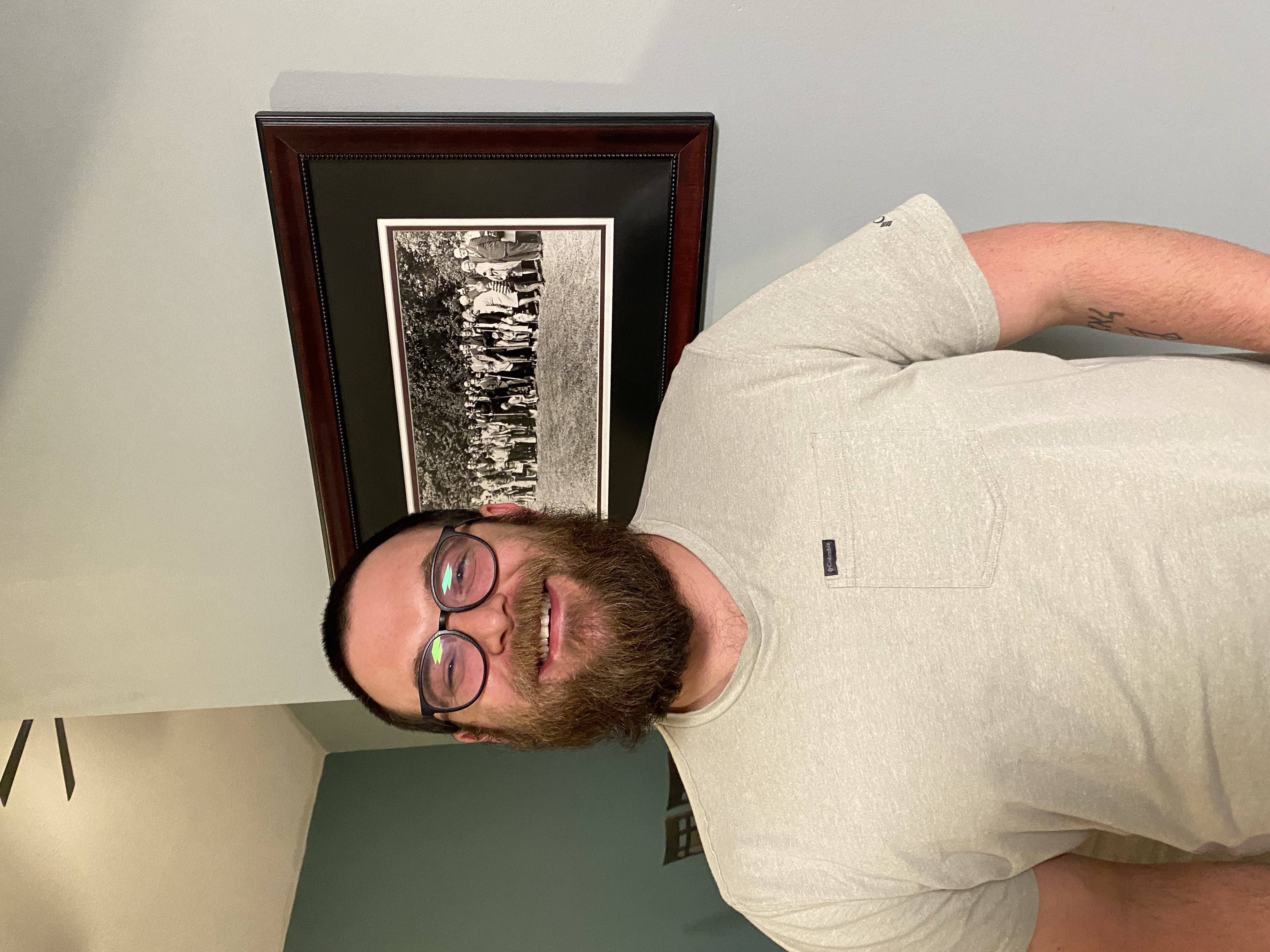
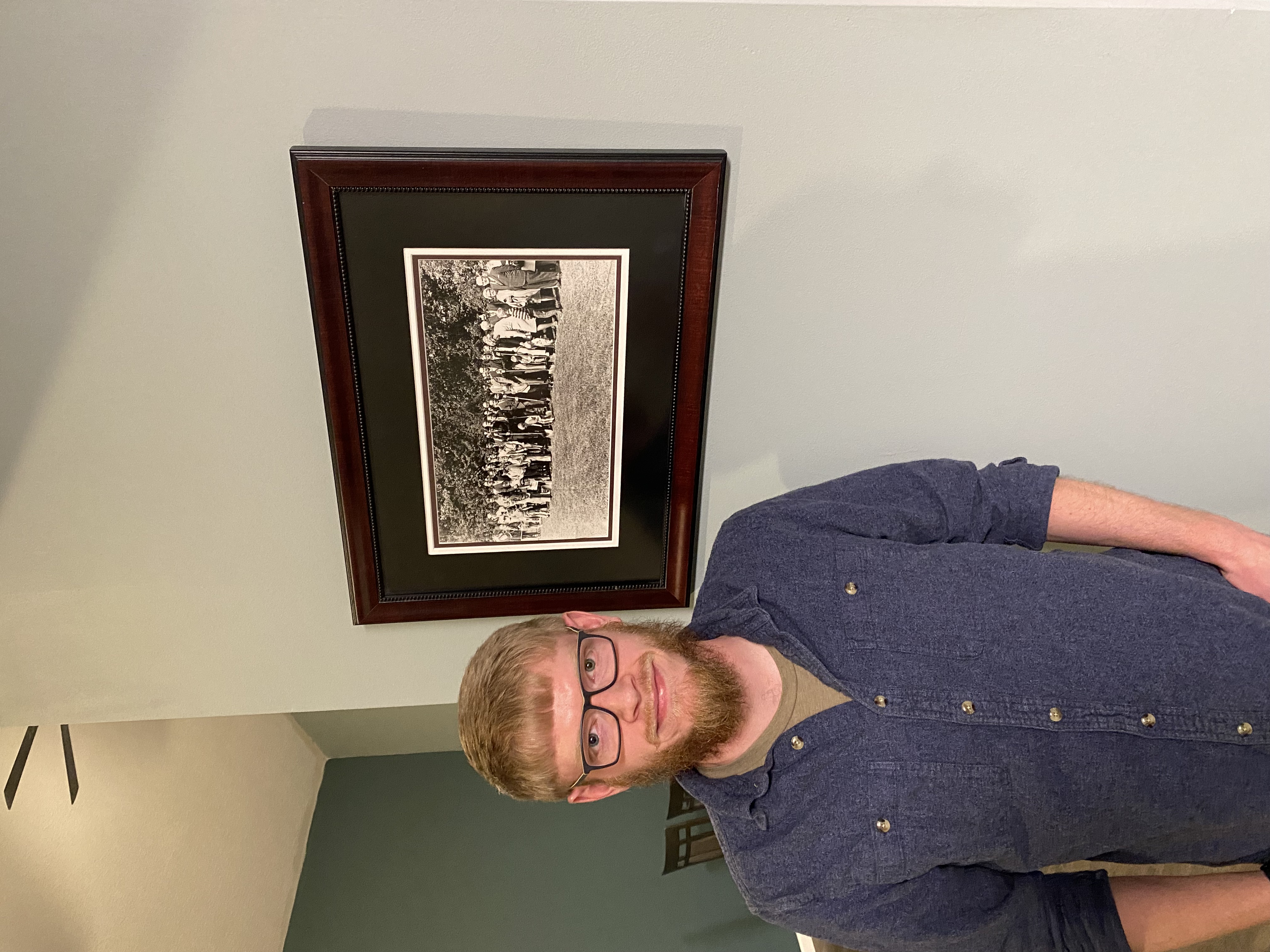
These men are the overseers/elders of the church. There is no distinction in their calling (vocational pastors, from the Latin word voca, "to call") to serve in this way. The slight difference for Sam & Dawson is that they serve as occupational pastors, in that their calling has extended into full-time work positions. Any of these men can and should be approached when you "just need to talk to a pastor."
Sam | Dawson | Devin Osko (pictured left) | Curtis Strong (pictured center) | Scott Strong (pictured right)