
What is proper Biblical canon?
Canon: collection of texts accepted as genuine. So when you hear people talk about Biblical canon, or non canonical books, deuterocanonical, etc. they’re talking about “what’s legitimately Scripture?” How do we know the Bible wasn’t edited by people over time and that what we have today is what’s actually proper Scripture?
Understand how seriously God takes the idea of changing Scripture
- Deuteronomy 4:1-2 “And now, O Israel, listen to the statutes and the rules that I am teaching you, and do them, that you may live, and go in and take possession of the land that the Lord, the God of your fathers, is giving you. You shall not add to the word that I command you, nor take from it, that you may keep the commandments of the Lord your God that I command you.”
- Proverbs 30:5-6 “Every word of God proves true; He is a shield to those who take refuge in Him. Do not add to His words, lest He rebuke you and you be found a liar.”
- Revelation 22:18-19 “I warn everyone who hears the words of the prophecy of this book: if anyone adds to them, God will add to him the plagues described in this book, and if anyone takes away from the words of the book of this prophecy, God will take away his share in the tree of life and in the holy city, which are described in this book.”
Doctrine of preservation. What do we mean by preservation?
That the Lord has kept His Word intact as to its original meaning. Preservation simply means that we can trust the Scriptures because God has sovereignly overseen the process of transmission over the centuries so the message has not changed.
- Isaiah 40:8 “The grass withers, the flower fades, but the word of our God will stand forever.”
- Matthew 5:18 “For truly, I say to you, until heaven and earth pass away, not an iota, not a dot, will pass from the Law until all is accomplished”
- Matthew 24:35 “Heaven and earth will pass away, but my words will not pass away.”
- Romans 15:4 “For whatever was written in former days was written for our instruction, that through endurance and through the encouragement of the Scriptures we might have hope.”
- Jesus, as the truest revelation of God, endorsed the Hebrew Bible (our Old Testament) as God’s Word that will never become void (Matthew 5:17-18; John 10:34-35).
- He identifies the voice of the human author in Scripture as God’s own voice (Matthew 19:4-6; Mark 12:36).
- His earliest followers agreed in identifying all Scripture as originating in God and containing absolute truth (1 Timothy 3:15-17; 2 Peter 1:20-21).
- They were received as such by the earliest Christians, even as early as Peter viewing Paul’s writings to be as authoritative as the Hebrew Bible (1 Peter 3:15-16).
Historically, the Bible as we currently have it is the same one accepted by the people closest to its transcription.
“For we have not an innumerable multitude of books among us, disagreeing from and contradicting one another [as the Greeks have] but only twenty-two books, which contain the records of all the past times; which are justly believed to be divine.” - Josephus (writing about the OT around 90 AD) Against Apion (Book I, 38-42)
- The Law: Genesis, Exodus, Leviticus, Numbers, Deuteronomy
- The Former Prophets: Joshua, Samuel, Kings,
- The Latter Prophets: Isaiah, Jeremiah-Lamentations, Ezekiel, The book of the twelve (Hosea, Joel, Amos, Obadiah, Jonah, Micah, Nahum, Habakkuk, Zephaniah, Haggai, Zechariah, Malachi)
- The Writings: Psalms, Proverbs, Job, Song of Songs, Ruth-Judges, Ecclesiastes, Esther, Daniel, Ezra-Nehemiah, Chronicles
- In Protestant Bibles, many of the books are divided; same amount of writing, just organized differently.
“These are the fountains of salvation, that whoever thirsts may be satisfied by the eloquence which is in them. In them alone is set forth the doctrine of piety. Let no one add to them, nor take anything from them.” - Athanasius (referencing the NT as it is in our versions still), 39th Festal Letter (367 AD)
We also need to have an understanding of God’s character. If this is the Bible that has been used and accepted for centuries by His Church, would God be a loving God if He allowed us to use incorrect source material? This argument most likely won’t carry much weight with unbelievers, but if you’re a believer considering this question, God’s character should provide much comfort and confidence.
Gospel (or Book) of Thomas
- Written ~100 years too late & it contradicts Jesus’ teachings throughout rest of NT, which by secular bibliographical methods eliminates it.
Apocrypha
- 1 & 2 Maccabees, Tobit, Judith, Baruch, Wisdom and Saruch (as well as some additions to OT books)
- "The Jewish canon, or the Hebrew Bible, was universally received, while the Apocrypha added to the Greek version of the Septuagint were only in a general way accounted as books suitable for church reading, and thus as a middle class between canonical and strictly apocryphal (pseudonymous) writings. And justly; for those books, while they have great historical value, and fill the gap between the Old Testament and the New, all originated after the cessation of prophecy, and they cannot therefore be regarded as inspired, nor are they ever cited by Christ or the apostles" (Philip Schaff, History of the Christian Church)
Roman Catholicism added the apocrypha to the Biblical canon at the Council of Trent in 1546; calls them deuterocanonical (“second canon”)
- Questionable vote since the apocrypha contains writing that supports many of the Catholic practices the Reformation was speaking against (purgatory, praying for the dead, treasury of merit → penance, veneration of saints)
Jerome’s Latin Vulgate in 405 AD identified these books as apocryphal (interesting side note: Council of Trent made the Vulgate the official example of the Biblical canon)
- “This preface to the Scriptures may serve as a “helmeted” introduction to all the books which we turn from Hebrew into Latin, so that we may be assured that what is not found in our list must be placed amongst the Apocryphal writings. Wisdom, therefore, which generally bears the name of Solomon, and the book of Jesus, the Son of Sirach, and Judith, and Tobias, and the Shepherd are not in the canon.”
- “What sin have I committed in following the judgment of the churches? But when I repeat what the Jews say against the Story of Susanna and the Hymn of the Three Children, and the fables of Bel and the Dragon, which are not contained in the Hebrew Bible, the man who makes this a charge against me proves himself to be a fool and a slanderer.”
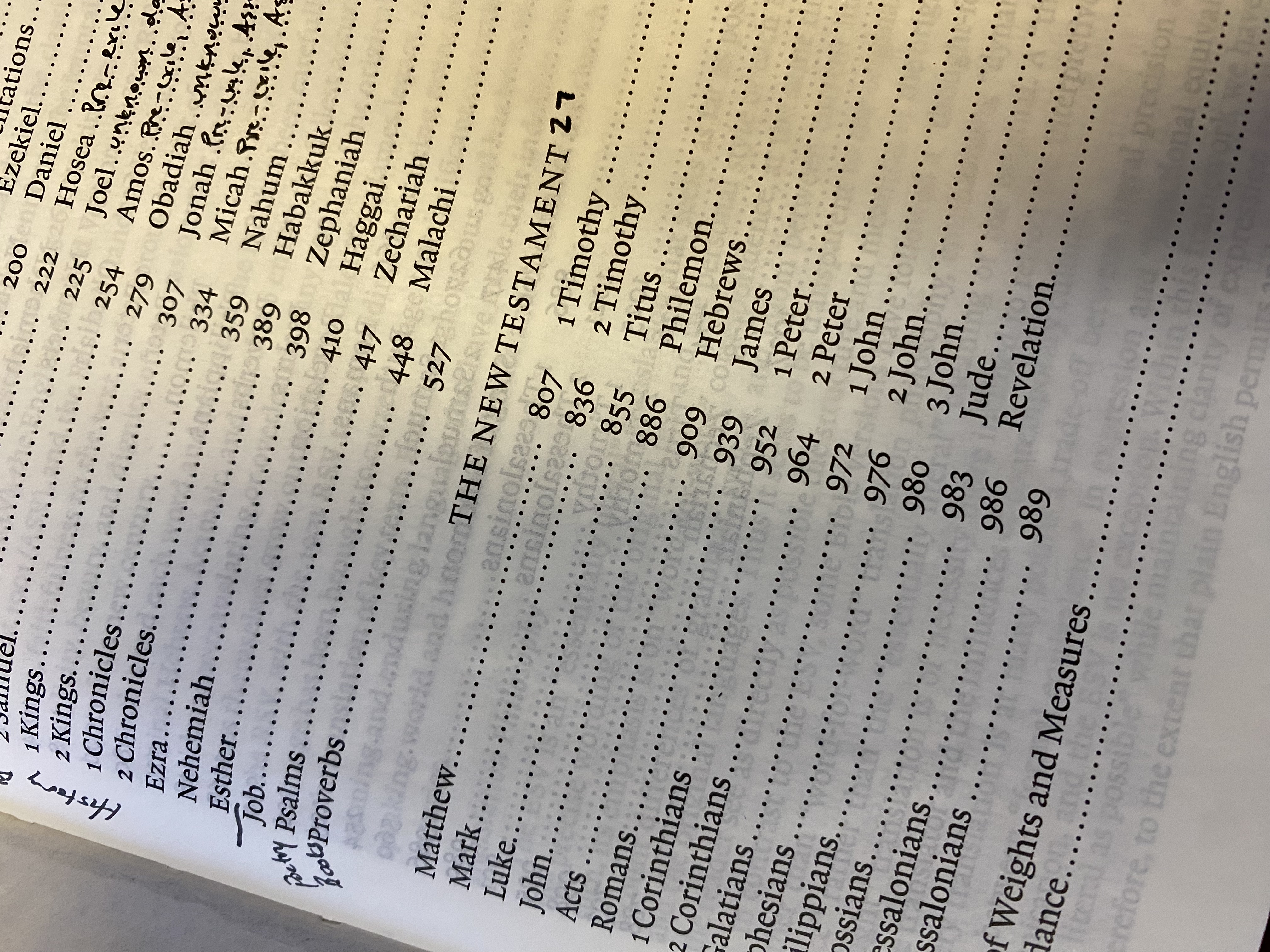
Thus, based on historical record and historical analysis, we can be confident that the proper Biblical canon is limited to the 66 books of Genesis, Exodus, Leviticus, Numbers, Deuteronomy, Joshua, Judges, Ruth, 1 & 2 Samuel, 1 & 2 Kings, 1 & 2 Chronicles, Ezra, Nehemiah, Esther, Job, Psalms, Proverbs, Ecclesiastes, Song of Solomon, Isaiah, Jeremiah, Lamentations, Ezekiel, Daniel, Hosea, Joel, Amos, Obadiah, Jonah, Micah, Nahum, Habakkuk, Zephaniah, Haggai, Zechariah, Malachi, Matthew, Mark, Luke, John, Acts, Romans, 1 & 2 Corinthians, Galatians, Ephesians, Philippians, Colossians, 1 & 2 Thessalonians, 1 & 2 Timothy, Titus, Philemon, Hebrews, James, 1 & 2 Peter, 1, 2, & 3 John, Jude, Revelation.